HMSA QUEST · Hawaii Medicaid
HMSA QUEST pelvic floor physical therapy, by video.
In-network with HMSA QUEST. For Hawaii Medicaid members on HMSA's QUEST plan: one-on-one pelvic health and orthopedic physical therapy with Dr. Elana Shalem, DPT, from home on any island, usually at little or no cost.
- HMSA QUEST in-network
- Usually little or no cost
- Usually seen within a week

Who this is for
Care that fits real life.
Coverage is confirmed with HMSA QUEST before scheduling. Bring the QUEST card to the free 15-minute discovery call.
Pregnancy and after birth
Pelvic girdle and back pain in pregnancy, recovery after a vaginal birth or C-section, abdominal separation and leaking after a baby are among the most common reasons QUEST members book.
Bladder, bowel and pelvic pain
Leaking, urgency, constipation, prolapse, pelvic pain and pain with intercourse are treated with education, coordination training and a short home program.
Men and orthopedic care
Men are seen for leaking after prostate surgery, pelvic pain and urgency, and anyone can be seen for back, neck, hip, knee and shoulder problems.
Referral and approvals
QUEST may require a referral from the primary care provider and, for longer care, an approval from the plan. Both are checked before the first visit; referrals can be faxed to 844-886-0285.
How to start
Three steps, no surprises.
Group NPI 1487545786 · referral fax 844-886-0285 · 808-330-7934.
1. Free 15-minute call
Book online or call 808-330-7934. The call covers what is going on, whether video fits, and the QUEST card details.
2. Coverage checked first
HMSA QUEST coverage and any referral requirement are confirmed before scheduling, so nothing is billed by surprise.
3. Visits by video
A 60-minute evaluation, then 45-minute follow-ups. A phone with a camera and a private room are enough, and a baby can be in the room.
Why video
No bus, no parking, no childcare to arrange.
For many QUEST members, the hardest part of physical therapy is getting there: a bus across town, a sitter for the kids, a day off work, or a flight from a neighbor island. Video visits remove the trip.
Molokai, Lanai, Hana, Ka'u, Puna and the west side of Kauai are all seen the same way, one-on-one with Dr. Shalem.
Also in-network: TRICARE West · HMSA PPO and HMO.
By town
Every island, every town.
Oahu
- Honolulu
- Aiea and Pearl City
- Waipahu
- Ewa Beach
- Kapolei
- Waianae Coast
- Mililani
- Wahiawa and Schofield
- Kaneohe
- Kailua
- Salt Lake and Moanalua
- Hawaii Kai and East Honolulu
- Waimanalo
- Haleiwa and the North Shore
- Laie, Kahuku and Hauula
- Kakaako and Ala Moana
- Waikiki
- Manoa, Makiki and Nuuanu
- Kahala and Diamond Head
- Kalihi and Kapalama
Hawaii Island
- Hilo and the Hamakua Coast
- Kona and West Hawaii
- Puna
- Waimea and Kohala
- Kau and Ocean View
- Honokaa and the Hamakua Coast
- South Kona
- Waikoloa and the Kohala Coast
- Volcano and Upper Puna
Maui, Molokai and Lanai
- Kahului and Wailuku
- Kihei and Wailea
- Upcountry and North Shore Maui
- West Maui
- Molokai
- Lanai
- Hana and East Maui
- Wailea and Makena
Kauai
Questions
HMSA QUEST questions, answered
- Is there a pelvic floor physical therapist who takes HMSA QUEST?
- Does HMSA QUEST (Hawaii Medicaid) cover pelvic floor physical therapy?
- Can HMSA QUEST members get pelvic floor physical therapy on the neighbor islands?
- Do I need a referral for physical therapy with HMSA?
- Does HMSA cover pelvic floor physical therapy?
How it works
How a virtual visit works
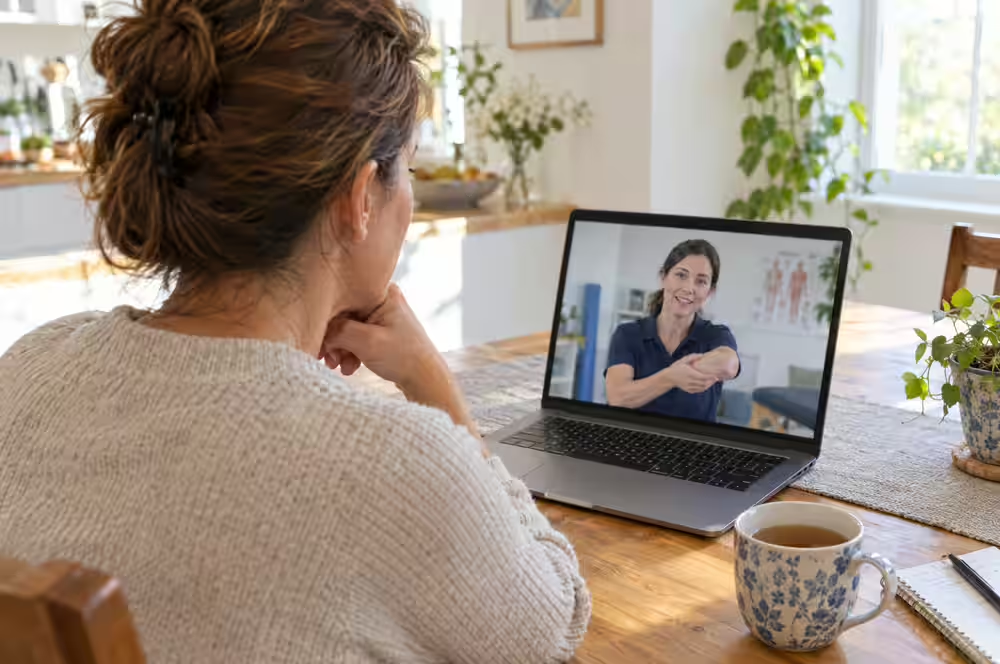
Most of pelvic floor physical therapy is education, breathing and pressure management, movement retraining, and a home program. All of it works on camera. During the evaluation, Dr. Shalem guides a self-assessment so she can see how the pelvic floor is coordinating with breath and movement. An internal examination is not possible by video; if a hands-on assessment would change the plan, she says so and helps the patient find local care.
Discovery call
15 minutes, free, by phoneA short call to hear what is going on, explain how visits work, and check insurance or pricing. No pressure to book.
Evaluation
60 minutes, by videoDr. Shalem takes a full history, watches how you move and breathe, and guides the self-assessments she needs to build a plan.
Your plan
Same visitYou leave the evaluation with a plain-language explanation and a short home program, usually a few minutes a day.
Follow-ups
45 minutes, every 1 to 2 weeksProgress checks, program updates, and techniques you can do yourself, for as long as they are useful.
For a video visit you will need
- A phone, tablet, or laptop with a camera
- A private room
- A mat or towel
- About an hour
Questions
HMSA QUEST questions in Hawaii
Does HMSA QUEST cover pelvic floor physical therapy?
Yes. HMSA QUEST covers medically necessary physical therapy, including pelvic floor physical therapy, usually with little or no cost to the member. EMS Therapy is in-network with HMSA QUEST.
Do QUEST members need a referral?
Often, yes. HMSA QUEST may require a referral from the primary care provider, and longer care may need plan approval. Both are checked before the first visit.
Can QUEST members be seen on the neighbor islands?
Yes. Visits are by secure video anywhere in Hawaii, including Molokai, Lanai and the rural parts of every island.
What is needed for a video visit?
A phone, tablet or laptop with a camera, a private room and enough floor space for a mat. Cellular data often works.

Your physical therapist
Dr. Elana Shalem, DPT
Doctor of Physical Therapy, University of St. Augustine for Health Sciences, Miami. Licensed in Hawaii.
Dr. Shalem treats pelvic health for women and men, from pregnancy and postpartum recovery to bladder, bowel, and pelvic pain conditions and recovery after prostate or pelvic surgery, and general orthopedic conditions of the back, neck, hips, knees, shoulders, and feet. Visits are one-on-one and unhurried, and she explains what she is seeing in plain language.
More about Dr. ShalemPrefer to write? Send a message.
Questions about insurance, pricing, or whether physical therapy is the right next step? We reply within one business day.
Start with a free 15-minute call.
Tell us what is going on, hear how Dr. Shalem would approach it, and decide from there.