Maui, Molokai and Lanai
Pelvic floor and orthopedic physical therapy in Maui, Molokai and Lanai, by video.
TRICARE, HMSA, and HMSA QUEST in-network. Women's and men's pelvic health and orthopedic physical therapy, one-on-one with a Doctor of Physical Therapy, from home anywhere in Maui, Molokai and Lanai.
- No state referral requirement; some plans need one
- Usually seen within a week
- Video visits anywhere in Maui, Molokai and Lanai

What we treat in Maui, Molokai and Lanai
Three specialties. One physical therapist.
Maui County has a handful of physical therapists and no one dedicated to pelvic health; Molokai and Lanai have no specialist care at all. Video visits bring a pelvic floor specialist to Kahului, Kihei, Lahaina, Upcountry, Hana, Kaunakakai, and Lanai City without a flight.

Women's pelvic floor physical therapy
- Pregnancy and after birth
- Postpartum recovery · Pregnancy pelvic and back pain · Diastasis recti · C-section recovery
- Bladder and bowel
- Urinary incontinence · Overactive bladder, urgency and frequency · Pelvic organ prolapse · Constipation and bowel dysfunction
- Pain and recovery
- Painful intercourse · Chronic pelvic pain · Menopause pelvic health · Recovery after pelvic surgery
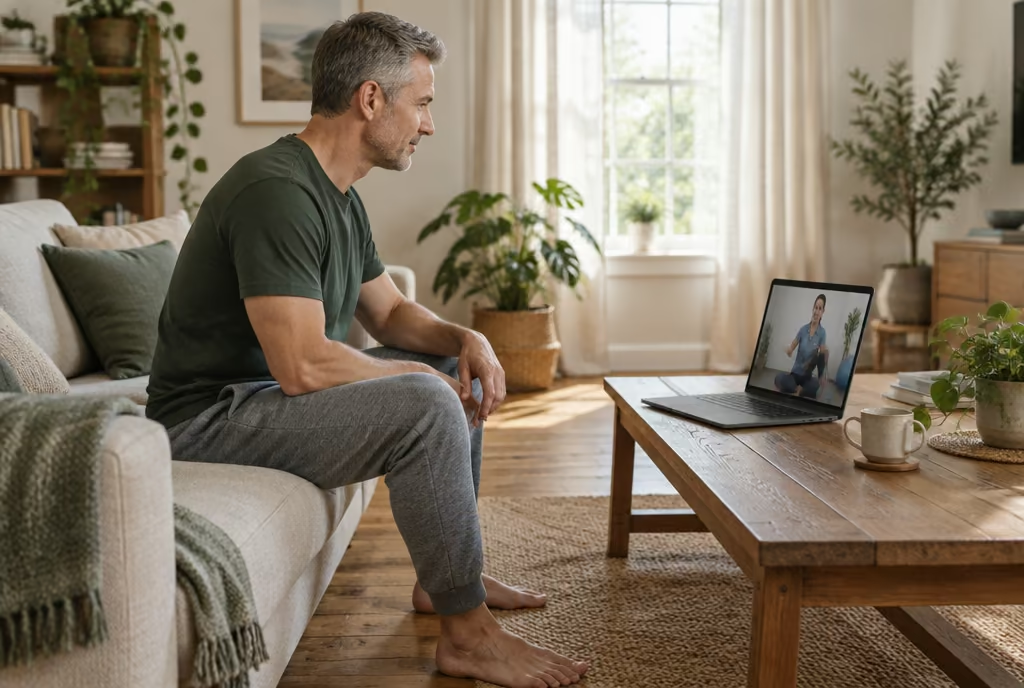
Men's pelvic floor physical therapy
- After prostate treatment
- Leaking after prostate surgery · Pelvic floor and erectile dysfunction
- Pain and urgency
- Chronic pelvic pain syndrome · Male urgency, frequency and leaking

Orthopedic physical therapy
- Spine
- Low back pain · Sciatica · Neck pain and headaches
- Hip and knee
- Hip pain · Knee pain · Rehab after knee or hip surgery
- Shoulder, foot and ankle
- Shoulder pain · Foot and ankle pain
Coverage in Hawaii
Insurance and pricing
Bring your plan name to the discovery call and we confirm your physical therapy benefit before the first visit. No surprises.
TRICARE
In-network (TRICARE West). TRICARE Select members can book directly with no referral. TRICARE Prime members need a referral from their primary care manager, and we tell you exactly what to ask for.
HMSA
In-network with HMSA PPO and HMO plans. Some HMSA plans require a referral from your primary care provider; we check yours before the first visit.
HMSA QUEST
In-network with HMSA QUEST (Hawaii Medicaid). We confirm coverage before your first visit.
Private pay
Available for any other plan. HSA and FSA cards accepted.
Referrals
Hawaii allows you to start physical therapy without a physician referral. Your insurance plan may still ask for one (TRICARE Prime and some HMSA plans do), and we check that for you before the first visit.
All of Maui, Molokai, and Lanai are seen by video.
Questions
Questions people ask in Maui, Molokai and Lanai
- Is there a pelvic floor physical therapist in Maui, Molokai and Lanai?
- Do I need a referral for physical therapy in Hawaii?
- Can I get pelvic floor physical therapy by telehealth in Hawaii?
- Does TRICARE cover pelvic floor physical therapy?
- Does HMSA cover pelvic floor physical therapy?
- Does HMSA QUEST (Hawaii Medicaid) cover pelvic floor physical therapy?
- Does the VA cover pelvic floor physical therapy in Hawaii?
- Does TRICARE for Life cover pelvic floor physical therapy?
- How do I get a TRICARE Prime referral for pelvic floor physical therapy in Hawaii?
- Does TRICARE Select need a referral for physical therapy in Hawaii?
- Does TRICARE Reserve Select cover pelvic floor physical therapy in Hawaii?
- Can active-duty service members see a civilian pelvic floor physical therapist in Hawaii?
- Does TRICARE cover pelvic floor physical therapy after pregnancy in Hawaii?
- Does TRICARE cover pelvic floor physical therapy during pregnancy in Hawaii?
- Does TRICARE cover pelvic floor physical therapy for men in Hawaii?
- Does TRICARE cover telehealth physical therapy in Hawaii?
- Can military families keep their physical therapist after a PCS from Hawaii?
- Can military spouses in Hawaii get pelvic floor physical therapy without going on base?
- Do Coast Guard families in Hawaii use TRICARE for physical therapy?
- Does TRICARE cover physical therapy for urinary incontinence in Hawaii?
- Does TRICARE cover physical therapy for diastasis recti in Hawaii?
- Does TRICARE cover physical therapy for pelvic pain and painful intercourse in Hawaii?
- Does TRICARE cover physical therapy for back pain in Hawaii?
- Is there a pelvic floor physical therapist in Hawaii who takes HMSA?
- Is there a pelvic floor physical therapist who takes HMSA QUEST?
- Do I need a referral for physical therapy with HMSA?
- Does HMSA cover physical therapy by telehealth?
- Does HMSA cover postpartum pelvic floor physical therapy?
- Can pelvic floor physical therapy be done over video?
- How many pelvic floor physical therapy visits does it take?
- How much does pelvic floor physical therapy cost?
- Do men need pelvic floor physical therapy?
Where
Anywhere in Maui, Molokai and Lanai
A video visit works the same in Kahului, Wailuku, Kihei, Lahaina, Makawao, Pukalani, Haiku, Hana, Kaunakakai, and Lanai City as it does anywhere else in Maui, Molokai and Lanai. No clinic, no drive, no waiting room.
- Kahului
- Wailuku
- Kihei
- Lahaina
- Makawao
- Pukalani
- Haiku
- Hana
- Kaunakakai
- Lanai City
- Everywhere in between
Pages for each area
How it works
How a virtual visit works
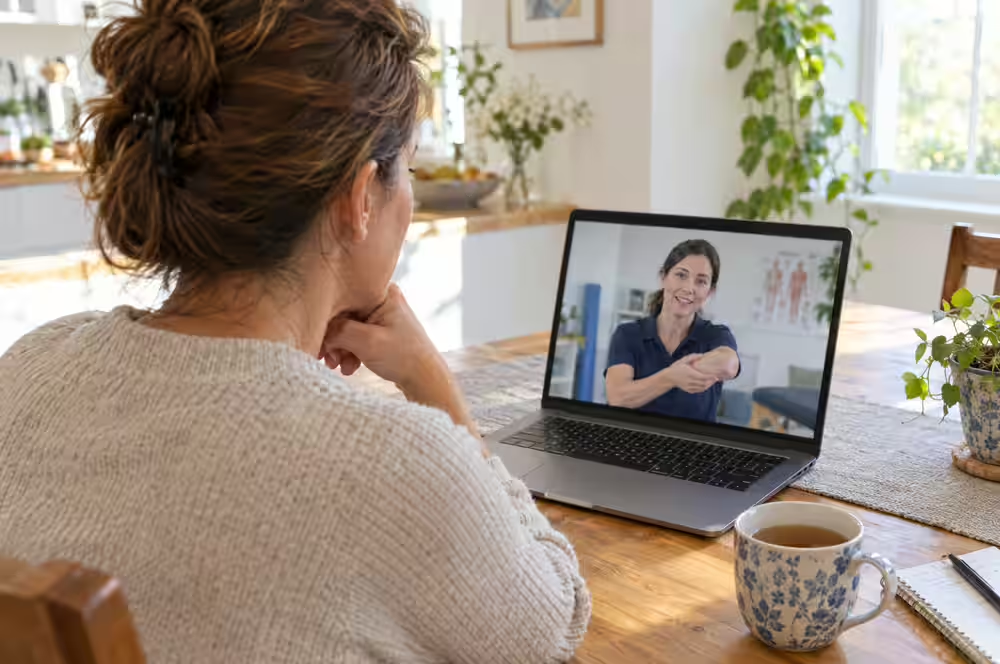
Most of pelvic floor physical therapy is education, breathing and pressure management, movement retraining, and a home program. All of it works on camera. During the evaluation, Dr. Shalem guides a self-assessment so she can see how the pelvic floor is coordinating with breath and movement. An internal examination is not possible by video; if a hands-on assessment would change the plan, she says so and helps the patient find local care.
Discovery call
15 minutes, free, by phoneA short call to hear what is going on, explain how visits work, and check insurance or pricing. No pressure to book.
Evaluation
60 minutes, by videoDr. Shalem takes a full history, watches how you move and breathe, and guides the self-assessments she needs to build a plan.
Your plan
Same visitYou leave the evaluation with a plain-language explanation and a short home program, usually a few minutes a day.
Follow-ups
45 minutes, every 1 to 2 weeksProgress checks, program updates, and techniques you can do yourself, for as long as they are useful.
For a video visit you will need
- A phone, tablet, or laptop with a camera
- A private room
- A mat or towel
- About an hour
Questions
Common questions in Maui, Molokai and Lanai
Do I need a referral for physical therapy in Hawaii?
Hawaii allows you to start physical therapy without a physician referral. Your insurance plan may still ask for one (TRICARE Prime and some HMSA plans do), and we check that for you before the first visit.
What insurance do you take in Hawaii?
TRICARE: In-network (TRICARE West). TRICARE Select members can book directly with no referral. TRICARE Prime members need a referral from their primary care manager, and we tell you exactly what to ask for. HMSA: In-network with HMSA PPO and HMO plans. Some HMSA plans require a referral from your primary care provider; we check yours before the first visit. HMSA QUEST: In-network with HMSA QUEST (Hawaii Medicaid). We confirm coverage before your first visit. Private pay: Available for any other plan. HSA and FSA cards accepted.
Do you see men as well as women?
Yes. Dr. Shalem treats women's pelvic health, men's pelvic health (leaking after prostate surgery, chronic pelvic pain, urgency, and pelvic-floor-related erectile dysfunction), and orthopedic conditions for everyone.
Do I have to live near a city to be seen?
No. Video visits work anywhere in Maui, Molokai and Lanai with an internet connection. Patients in rural areas are a large share of the practice.
What does a visit cost?
With in-network insurance, your plan's physical therapy copay or cost share; we verify it before the first visit. Private-pay rates are quoted on the free discovery call, and a superbill is provided for out-of-network reimbursement.
How soon can I be seen?
Usually within a week. Evening and weekend appointments are available.

Your physical therapist
Dr. Elana Shalem, DPT
Doctor of Physical Therapy, University of St. Augustine for Health Sciences, Miami. Licensed in Hawaii.
Dr. Shalem treats pelvic health for women and men, from pregnancy and postpartum recovery to bladder, bowel, and pelvic pain conditions and recovery after prostate or pelvic surgery, and general orthopedic conditions of the back, neck, hips, knees, shoulders, and feet. Visits are one-on-one and unhurried, and she explains what she is seeing in plain language.
More about Dr. ShalemPrefer to write? Send a message.
Questions about insurance, pricing, or whether physical therapy is the right next step? We reply within one business day.
Start with a free 15-minute call.
Tell us what is going on, hear how Dr. Shalem would approach it, and decide from there.