Women's pelvic health · Oahu
Physical therapy for painful intercourse in Oahu
Pain with intimacy is one of the most common and least discussed pelvic floor problems. It is usually driven by muscles that have learned to guard, and that pattern can be unlearned.
- TRICARE, HMSA, and HMSA QUEST in-network
- No state referral requirement; some plans need one
- Video visits anywhere in Oahu

About the condition
Painful intercourse: what is going on.
Pain with penetration, at the entrance or deep inside, affects a large share of women at some point: after childbirth, after menopause, with endometriosis or recurrent infections, after a painful experience, or for no identifiable reason. Vaginismus is an involuntary tightening that makes penetration difficult or impossible. Vulvodynia is persistent burning or rawness at the vulva. In all of these, the pelvic floor muscles are usually overactive and tender, and the nervous system has learned to brace in anticipation.
Pelvic floor physical therapy treats the muscle and nervous-system side of the problem and works alongside the patient's gynecologist, who manages hormonal, dermatologic, and other causes.
Common experiences
What people with painful intercourse often describe
These are the patterns Dr. Shalem hears most often. Any of them is a reason to book a discovery call.
Pain at the vaginal entrance with penetration
Deep pain with intercourse or with a pelvic exam
Burning, rawness, or sensitivity at the vulva
Inability to use tampons or tolerate an exam
Pain that began after childbirth, surgery, or menopause
Avoiding intimacy because of pain
Treatment
How physical therapy addresses it.
The program teaches the pelvic floor to relax and lengthen, uses breathing and gradual desensitization, includes self-treatment techniques the patient controls at home, and addresses the fear-tension cycle directly. Dilator work is guided when appropriate. Progress is paced entirely by the patient.
What a video visit looks like
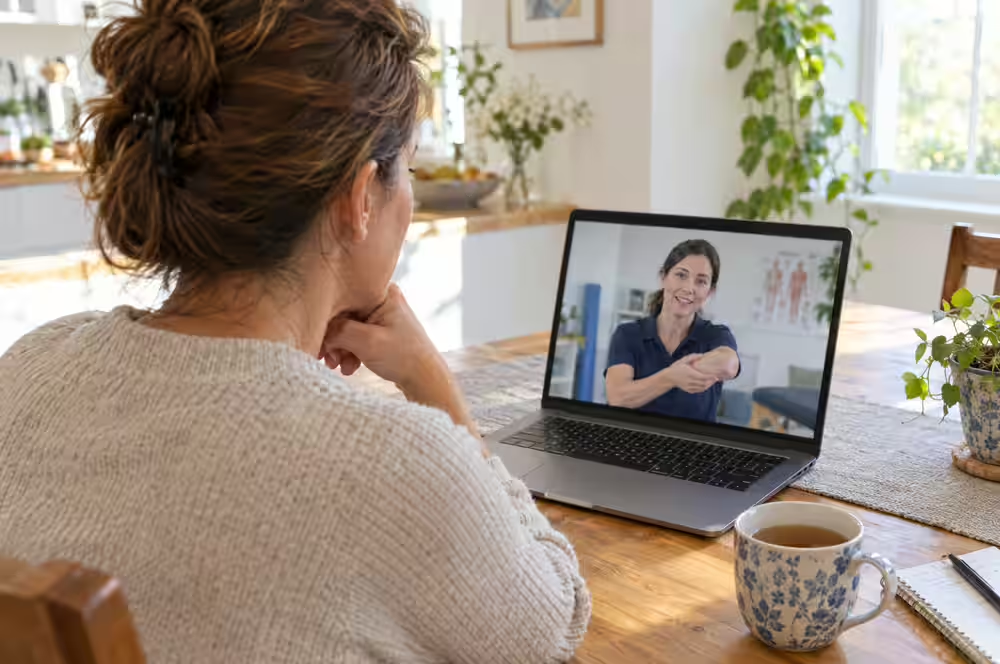
This is one of the conditions patients most prefer to treat from home. Visits are private and one-on-one, the patient controls what is on camera, and the self-treatment techniques are taught verbally with the patient's own feedback guiding the pace.
Coverage in Hawaii
Insurance and pricing
Bring your plan name to the discovery call and we confirm your physical therapy benefit before the first visit.
TRICARE
In-network (TRICARE West). TRICARE Select members can book directly with no referral. TRICARE Prime members need a referral from their primary care manager, and we tell you exactly what to ask for.
HMSA
In-network with HMSA PPO and HMO plans. Some HMSA plans require a referral from your primary care provider; we check yours before the first visit.
HMSA QUEST
In-network with HMSA QUEST (Hawaii Medicaid). We confirm coverage before your first visit.
Private pay
Available for any other plan. HSA and FSA cards accepted.
Referrals
Hawaii allows you to start physical therapy without a physician referral. Your insurance plan may still ask for one (TRICARE Prime and some HMSA plans do), and we check that for you before the first visit.
Military families at Joint Base Pearl Harbor-Hickam, Schofield Barracks, Marine Corps Base Hawaii, and Tripler are seen by video from home. TRICARE Select members need no referral.
How it works
How a virtual visit works
This is one of the conditions patients most prefer to treat from home. Visits are private and one-on-one, the patient controls what is on camera, and the self-treatment techniques are taught verbally with the patient's own feedback guiding the pace.
Discovery call
15 minutes, free, by phoneA short call to hear what is going on, explain how visits work, and check insurance or pricing. No pressure to book.
Evaluation
60 minutes, by videoDr. Shalem takes a full history, watches how you move and breathe, and guides the self-assessments she needs to build a plan.
Your plan
Same visitYou leave the evaluation with a plain-language explanation and a short home program, usually a few minutes a day.
Follow-ups
45 minutes, every 1 to 2 weeksProgress checks, program updates, and techniques you can do yourself, for as long as they are useful.
For a video visit you will need
- A phone, tablet, or laptop with a camera
- A private room
- A mat or towel
- About an hour
Questions
Painful intercourse questions in Oahu
Can painful intercourse be treated without an internal exam?
Yes. By video the work is self-guided: relaxation training, breathing, external and self-administered techniques, and dilator progression when appropriate. If an in-person assessment would change the plan, Dr. Shalem will say so.
Is this a physical problem or a psychological one?
Usually both are involved, because pain teaches the body to guard. Physical therapy treats the muscle side and works with a counselor or sex therapist when that is helpful.
How long does treatment take?
It varies widely. Some women see change in a few weeks; vaginismus often takes a few months of steady, patient-paced work.
Do I need a referral for physical therapy in Hawaii?
Hawaii allows you to start physical therapy without a physician referral. Your insurance plan may still ask for one (TRICARE Prime and some HMSA plans do), and we check that for you before the first visit.
What insurance do you take in Hawaii?
TRICARE: In-network (TRICARE West). TRICARE Select members can book directly with no referral. TRICARE Prime members need a referral from their primary care manager, and we tell you exactly what to ask for. HMSA: In-network with HMSA PPO and HMO plans. Some HMSA plans require a referral from your primary care provider; we check yours before the first visit. HMSA QUEST: In-network with HMSA QUEST (Hawaii Medicaid). We confirm coverage before your first visit. Private pay: Available for any other plan. HSA and FSA cards accepted.

Your physical therapist
Dr. Elana Shalem, DPT
Doctor of Physical Therapy, University of St. Augustine for Health Sciences, Miami. Licensed in Hawaii.
Dr. Shalem treats pelvic health for women and men, from pregnancy and postpartum recovery to bladder, bowel, and pelvic pain conditions and recovery after prostate or pelvic surgery, and general orthopedic conditions of the back, neck, hips, knees, shoulders, and feet. Visits are one-on-one and unhurried, and she explains what she is seeing in plain language.
More about Dr. ShalemPrefer to write? Send a message.
Questions about insurance, pricing, or whether physical therapy is the right next step? We reply within one business day.
Start with a free 15-minute call.
Tell us what is going on, hear how Dr. Shalem would approach it, and decide from there.