Men's pelvic health · Central and Eastern Montana
Physical therapy for chronic pelvic pain and prostatitis in Central and Eastern Montana
Most men diagnosed with chronic prostatitis do not have an infection. They have a pelvic floor that is clenched and painful, and physical therapy is the treatment urology guidelines recommend.
- Private pay with superbills for out-of-network reimbursement
- No referral needed (unrestricted direct access)
- Video visits anywhere in Central and Eastern Montana
About the condition
Chronic pelvic pain syndrome: what is going on.
Chronic pelvic pain syndrome, also called chronic prostatitis or CP/CPPS, is pain in the perineum, testicles, penis, lower abdomen, or rectum lasting more than three months, often with urinary urgency, pain with sitting, and pain after ejaculation. Men typically receive several rounds of antibiotics that do nothing, because in about nine of ten cases there is no bacterial infection. What there is, on examination, is a pelvic floor full of tender, overactive muscle.
The American Urological Association and European guidelines recommend pelvic floor physical therapy for CP/CPPS. A National Institutes of Health trial found that pelvic floor myofascial physical therapy was effective for men with the condition.
Common experiences
What people with chronic pelvic pain syndrome often describe
These are the patterns Dr. Shalem hears most often. Any of them is a reason to book a discovery call.
Aching or burning in the perineum, between the scrotum and anus
Testicular, penile, or rectal pain with no infection found
Pain with sitting, especially driving
Pain during or after ejaculation
Urgency, frequency, or a weak stream
Several courses of antibiotics with no change
Treatment
How physical therapy addresses it.
The program teaches the pelvic floor to relax and lengthen, retrains breathing to break the brace pattern, uses self-treatment techniques for trigger points in the pelvic floor, hips, and abdomen, and rebuilds sitting tolerance and activity. Pain education and flare planning are part of it. Dr. Shalem coordinates with the urologist.
What a video visit looks like
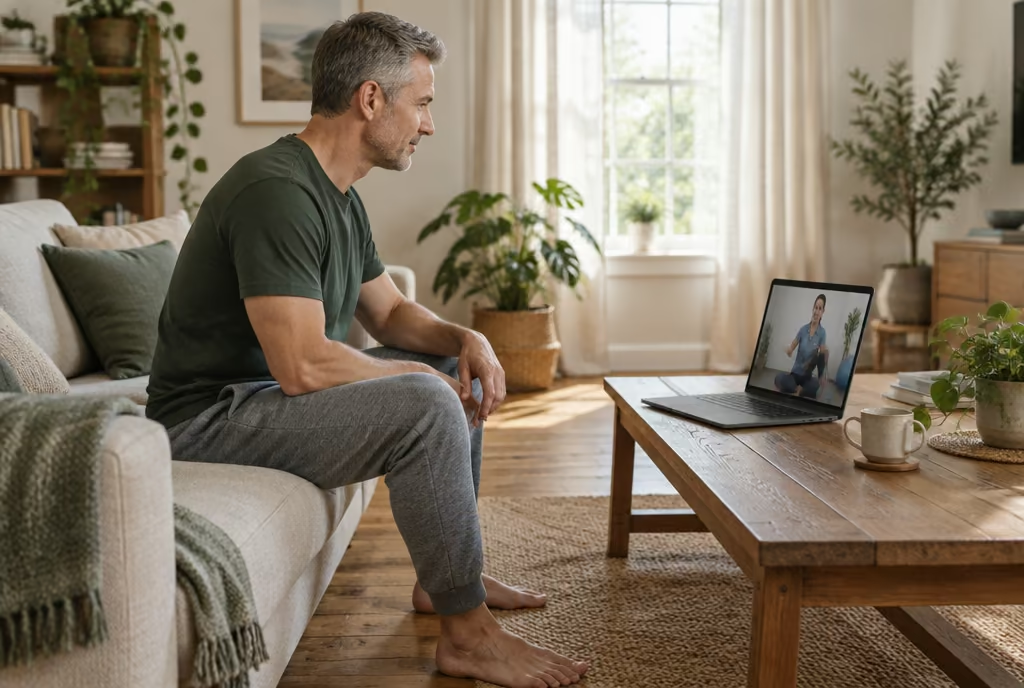
Chronic pelvic pain care is mostly self-treatment and retraining, which is why it translates well to video. Dr. Shalem guides self-release techniques on camera and tracks pain, sitting tolerance, and urinary symptoms across the plan.
Coverage in Montana
Insurance and pricing
Bring your plan name to the discovery call and we confirm your physical therapy benefit before the first visit.
Private pay
Visits in Montana are private pay. We provide a superbill you can submit to your insurer for out-of-network reimbursement. HSA and FSA cards accepted. Rates are quoted on the free discovery call.
Referrals
Montana allows you to see a physical therapist for evaluation and treatment without a physician referral, with no visit limit. Some insurance plans still ask for one, and we check that for you.
Billings, Great Falls, the Hi-Line, and the eastern plains are seen by video, including military families at Malmstrom AFB.
Questions
Questions people ask about chronic pelvic pain syndrome
How it works
How a virtual visit works
Chronic pelvic pain care is mostly self-treatment and retraining, which is why it translates well to video. Dr. Shalem guides self-release techniques on camera and tracks pain, sitting tolerance, and urinary symptoms across the plan.
Discovery call
15 minutes, free, by phoneA short call to hear what is going on, explain how visits work, and check insurance or pricing. No pressure to book.
Evaluation
60 minutes, by videoDr. Shalem takes a full history, watches how you move and breathe, and guides the self-assessments she needs to build a plan.
Your plan
Same visitYou leave the evaluation with a plain-language explanation and a short home program, usually a few minutes a day.
Follow-ups
45 minutes, every 1 to 2 weeksProgress checks, program updates, and techniques you can do yourself, for as long as they are useful.
For a video visit you will need
- A phone, tablet, or laptop with a camera
- A private room
- A mat or towel
- About an hour
Questions
Chronic pelvic pain syndrome questions in Central and Eastern Montana
If it is not an infection, what is it?
In most men, overactive and tender pelvic floor muscles plus a nervous system that has learned to guard. That is a treatable muscle problem, and the pain is real.
Should I keep doing Kegels?
Usually not. Men with CPPS typically have a pelvic floor that is too tight, and strengthening makes it worse. The program focuses on relaxation first.
How long does it take?
Most men need two to four months of consistent work. Flare-ups happen along the way, and the plan includes what to do about them.
Do I need a referral for physical therapy in Montana?
Montana allows you to see a physical therapist for evaluation and treatment without a physician referral, with no visit limit. Some insurance plans still ask for one, and we check that for you.
What insurance do you take in Montana?
Private pay: Visits in Montana are private pay. We provide a superbill you can submit to your insurer for out-of-network reimbursement. HSA and FSA cards accepted. Rates are quoted on the free discovery call.

Your physical therapist
Dr. Elana Shalem, DPT
Doctor of Physical Therapy, University of St. Augustine for Health Sciences, Miami. Licensed in Montana.
Dr. Shalem treats pelvic health for women and men, from pregnancy and postpartum recovery to bladder, bowel, and pelvic pain conditions and recovery after prostate or pelvic surgery, and general orthopedic conditions of the back, neck, hips, knees, shoulders, and feet. Visits are one-on-one and unhurried, and she explains what she is seeing in plain language.
More about Dr. ShalemPrefer to write? Send a message.
Questions about insurance, pricing, or whether physical therapy is the right next step? We reply within one business day.
Start with a free 15-minute call.
Tell us what is going on, hear how Dr. Shalem would approach it, and decide from there.