Conditions
Can urinary incontinence be treated with physical therapy over video?
Yes. Dr. Shalem guides a self-assessment of pelvic floor contraction and relaxation on camera, reviews a short bladder diary, and builds the program from there. Follow-ups track leaks, urgency, and progress toward the patient's own goals.
The details
What to know
Answered by the practice of Dr. Elana Shalem, DPT, pelvic floor and orthopedic physical therapist.
Stress incontinence is leaking when pressure rises: coughing, sneezing, laughing, lifting, running. Urge incontinence is leaking after a sudden strong need to go, often triggered by a key in the door or running water. Many women have both. The usual cause is a pelvic floor that is weak, poorly timed, or, surprisingly often, too tight to work well, combined with bladder habits that have drifted over years.
The evaluation finds out whether the pelvic floor needs strengthening, relaxing, or better timing, which is why generic Kegel advice so often fails. The program then pairs pelvic floor training with bladder retraining, fluid and habit adjustments, and pressure management during the activities that cause leaking. Impact training is added for runners and athletes.
An internal examination is not possible by video, and a small number of patients need hands-on treatment or imaging first; the therapist says so at the evaluation and helps the patient find local care rather than continuing by video.
At EMS Therapy the evaluation is 60 minutes and follow-ups are 45, by video, one-on-one with Dr. Elana Shalem, DPT. A free 15-minute discovery call comes first.
Where you live
Tell us where you are
Insurance, referral rules, and booking depend on where you live. Choose your area and we take you to the right page.
Not listed? Dr. Shalem can only treat patients located in a state where she holds a license. Send a message and we will tell you what is possible.
How it works
How a virtual visit works
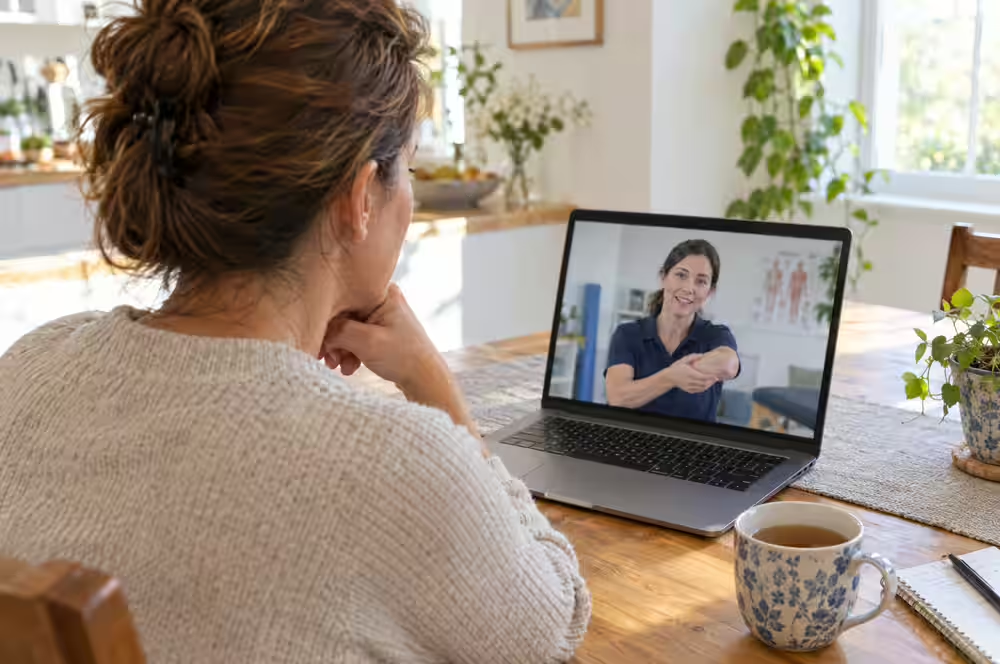
Most of pelvic floor physical therapy is education, breathing and pressure management, movement retraining, and a home program. All of it works on camera. During the evaluation, Dr. Shalem guides a self-assessment so she can see how the pelvic floor is coordinating with breath and movement. An internal examination is not possible by video; if a hands-on assessment would change the plan, she says so and helps the patient find local care.
Discovery call
15 minutes, free, by phoneA short call to hear what is going on, explain how visits work, and check insurance or pricing. No pressure to book.
Evaluation
60 minutes, by videoDr. Shalem takes a full history, watches how you move and breathe, and guides the self-assessments she needs to build a plan.
Your plan
Same visitYou leave the evaluation with a plain-language explanation and a short home program, usually a few minutes a day.
Follow-ups
45 minutes, every 1 to 2 weeksProgress checks, program updates, and techniques you can do yourself, for as long as they are useful.
For a video visit you will need
- A phone, tablet, or laptop with a camera
- A private room
- A mat or towel
- About an hour

Your physical therapist
Dr. Elana Shalem, DPT
Doctor of Physical Therapy, University of St. Augustine for Health Sciences, Miami. Licensed physical therapist.
Dr. Shalem treats pelvic health for women and men, from pregnancy and postpartum recovery to bladder, bowel, and pelvic pain conditions and recovery after prostate or pelvic surgery, and general orthopedic conditions of the back, neck, hips, knees, shoulders, and feet. Visits are one-on-one and unhurried, and she explains what she is seeing in plain language.
More about Dr. ShalemPrefer to write? Send a message.
Questions about insurance, pricing, or whether physical therapy is the right next step? We reply within one business day.
Start with a free 15-minute call.
Tell us what is going on, hear how Dr. Shalem would approach it, and decide from there.