Women's pelvic health
Physical therapy for chronic pelvic pain
Pelvic pain that has lasted more than six months almost always involves the pelvic floor muscles, whatever started it. Treating those muscles is often the piece that has been missing.
- Video visits in seven states
- Usually seen within a week

About the condition
Chronic pelvic pain: what is going on.
Chronic pelvic pain affects roughly one in seven women. It can start with endometriosis, interstitial cystitis, a difficult birth, surgery, an injury to the tailbone, or recurrent infections, and it often persists after the original cause is treated. The reason is that the pelvic floor and surrounding muscles tighten to guard against pain, and that tightness becomes its own source of pain: deep aching, burning, pressure, pain with sitting, with bladder filling, or with intimacy.
Physical therapy addresses the muscular and nervous-system side of chronic pelvic pain, which is why it is part of the recommended treatment for endometriosis, interstitial cystitis, vulvodynia, and pudendal neuralgia.
Common experiences
What people with chronic pelvic pain often describe
These are the patterns Dr. Shalem hears most often. Any of them is a reason to book a discovery call.
Deep pelvic aching or pressure that lasts for months
Pain with sitting, especially on firm surfaces
Pain with bladder filling or with intercourse
Tailbone pain, or burning along the inner thigh or perineum
Pain that persists after endometriosis or IC treatment
Flare-ups with stress or activity
Treatment
How physical therapy addresses it.
The program teaches the pelvic floor and hips to relax and lengthen, retrains breathing to break the brace pattern, builds a gradual return to sitting and activity, and includes self-treatment techniques for trigger points and tissue tension. Pain education, pacing, and flare planning are part of it. Dr. Shalem coordinates with the patient's gynecologist, urologist, or pain physician.
What a video visit looks like
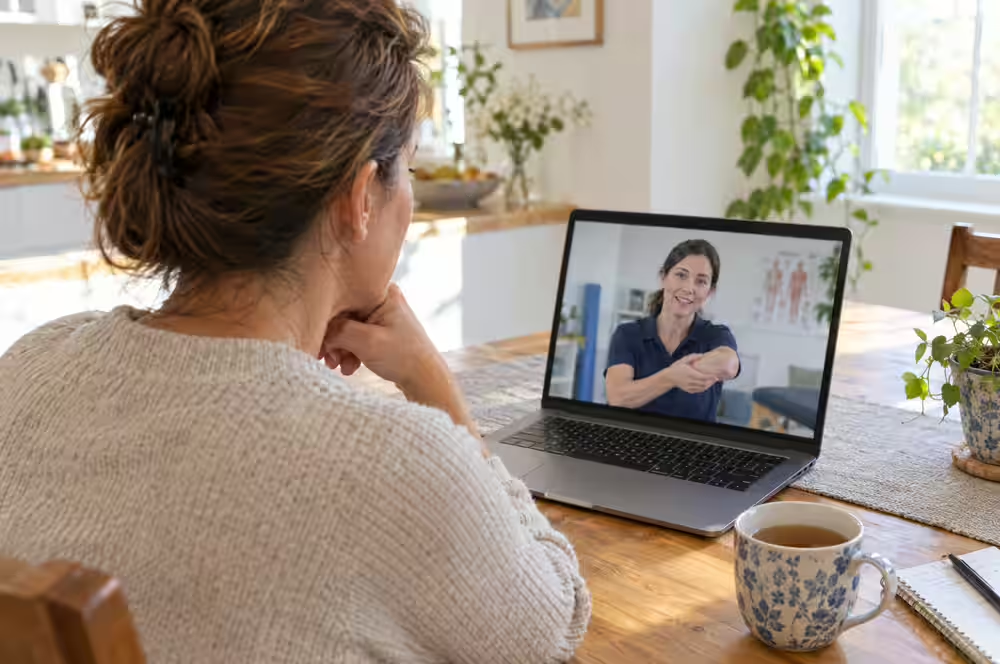
Chronic pain care is mostly retraining and self-treatment, which translates well to video. Dr. Shalem guides self-assessment and self-release techniques on camera and tracks pain, sitting tolerance, and function across the plan.
Where you live
Tell us where you are
Insurance, referral rules, and booking depend on where you live. Choose your area and we take you to the right page.
Not listed? Dr. Shalem can only treat patients located in a state where she holds a license. Send a message and we will tell you what is possible.
Questions
Questions people ask about chronic pelvic pain
How it works
How a virtual visit works
Chronic pain care is mostly retraining and self-treatment, which translates well to video. Dr. Shalem guides self-assessment and self-release techniques on camera and tracks pain, sitting tolerance, and function across the plan.
Discovery call
15 minutes, free, by phoneA short call to hear what is going on, explain how visits work, and check insurance or pricing. No pressure to book.
Evaluation
60 minutes, by videoDr. Shalem takes a full history, watches how you move and breathe, and guides the self-assessments she needs to build a plan.
Your plan
Same visitYou leave the evaluation with a plain-language explanation and a short home program, usually a few minutes a day.
Follow-ups
45 minutes, every 1 to 2 weeksProgress checks, program updates, and techniques you can do yourself, for as long as they are useful.
For a video visit you will need
- A phone, tablet, or laptop with a camera
- A private room
- A mat or towel
- About an hour
Questions
Chronic pelvic pain questions
I have endometriosis. How does physical therapy help?
Endometriosis pain leads the pelvic floor and abdominal wall to guard, and that muscle pain often continues after lesions are treated. Physical therapy treats that layer and is recommended alongside medical and surgical care.
What about interstitial cystitis?
Pelvic floor physical therapy is the only treatment given the highest evidence grade in the American Urological Association's IC guideline. The focus is relaxing the pelvic floor, not strengthening it.
Will I need to see someone in person?
Many patients complete their care by video. If a hands-on assessment or treatment would change the plan, Dr. Shalem will say so and help find local care.
Where do you see patients?
By video, to patients located in a state where Dr. Shalem is licensed. Choose your area on this page for the insurance and referral rules that apply to you.

Your physical therapist
Dr. Elana Shalem, DPT
Doctor of Physical Therapy, University of St. Augustine for Health Sciences, Miami. Licensed physical therapist.
Dr. Shalem treats pelvic health for women and men, from pregnancy and postpartum recovery to bladder, bowel, and pelvic pain conditions and recovery after prostate or pelvic surgery, and general orthopedic conditions of the back, neck, hips, knees, shoulders, and feet. Visits are one-on-one and unhurried, and she explains what she is seeing in plain language.
More about Dr. ShalemPrefer to write? Send a message.
Questions about insurance, pricing, or whether physical therapy is the right next step? We reply within one business day.
Start with a free 15-minute call.
Tell us what is going on, hear how Dr. Shalem would approach it, and decide from there.