Women's pelvic health · Portland Metro
Physical therapy for pelvic organ prolapse in Portland Metro
Prolapse is when the bladder, uterus, or rectum drops lower in the pelvis. About half of women who have given birth have some degree of it. Pelvic floor physical therapy is recommended as first-line treatment and reduces symptoms for most women with mild to moderate prolapse.
- Private pay with superbills for out-of-network reimbursement
- No referral needed (unrestricted direct access)
- Video visits anywhere in Portland Metro

About the condition
Pelvic organ prolapse: what is going on.
The pelvic organs are held up by ligaments and by the pelvic floor muscles. After childbirth, with chronic straining, heavy lifting, or menopause, that support can give, and women notice heaviness, a bulge at the vaginal opening, a feeling that something is falling out, difficulty emptying the bladder or bowel, or low back ache that worsens through the day. Symptoms are often worst in the evening and after standing or exercise.
Physical therapy does not lift the organs back, but it changes how much the prolapse is felt and how fast it progresses. It is the recommended first step before pessary fitting or surgery, and it improves outcomes for women who do go on to surgery.
Common experiences
What people with pelvic organ prolapse often describe
These are the patterns Dr. Shalem hears most often. Any of them is a reason to book a discovery call.
Heaviness or dragging in the pelvis, worse late in the day
A bulge or something felt at the vaginal opening
Difficulty fully emptying the bladder or bowel
Symptoms that worsen with lifting, standing, or exercise
Fear of exercising or lifting children
A recent diagnosis of cystocele, rectocele, or uterine prolapse
Treatment
How physical therapy addresses it.
The program builds pelvic floor strength and endurance, teaches pressure management so that lifting, coughing, and exercise push less on the organs, corrects bowel habits and straining, and progresses safe exercise. For women using a pessary, physical therapy complements it. Dr. Shalem coordinates with the patient's gynecologist or urogynecologist.
What a video visit looks like
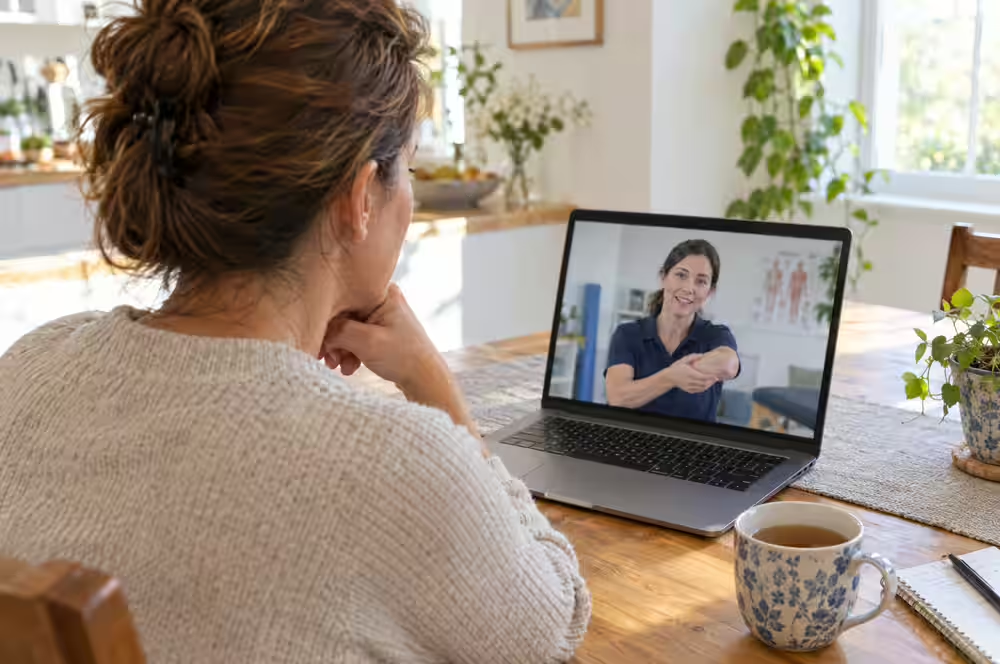
Dr. Shalem guides a self-assessment on camera, teaches positions that relieve pressure, and progresses strengthening and lifting technique over the plan. Symptom tracking shows what is changing.
Coverage in Oregon
Insurance and pricing
Bring your plan name to the discovery call and we confirm your physical therapy benefit before the first visit.
Private pay
Visits in Oregon are private pay. We provide a superbill you can submit to your insurer for out-of-network reimbursement. HSA and FSA cards accepted. Rates are quoted on the free discovery call.
Referrals
Oregon allows you to see a physical therapist for evaluation and treatment without a physician referral, with no visit limit. Some insurance plans still ask for one, and we check that for you.
Multnomah, Washington, Clackamas, and Columbia counties are seen by video.
Questions
Questions people ask about pelvic organ prolapse
How it works
How a virtual visit works
Dr. Shalem guides a self-assessment on camera, teaches positions that relieve pressure, and progresses strengthening and lifting technique over the plan. Symptom tracking shows what is changing.
Discovery call
15 minutes, free, by phoneA short call to hear what is going on, explain how visits work, and check insurance or pricing. No pressure to book.
Evaluation
60 minutes, by videoDr. Shalem takes a full history, watches how you move and breathe, and guides the self-assessments she needs to build a plan.
Your plan
Same visitYou leave the evaluation with a plain-language explanation and a short home program, usually a few minutes a day.
Follow-ups
45 minutes, every 1 to 2 weeksProgress checks, program updates, and techniques you can do yourself, for as long as they are useful.
For a video visit you will need
- A phone, tablet, or laptop with a camera
- A private room
- A mat or towel
- About an hour
Questions
Pelvic organ prolapse questions in Portland Metro
Can physical therapy reverse prolapse?
It does not move the organs back, but for mild to moderate prolapse it reduces symptoms, slows progression, and lets many women avoid or delay surgery. That is why guidelines recommend it first.
Is exercise safe with prolapse?
Yes, with the right technique and progression. Avoiding all exercise makes the pelvic floor weaker. The program teaches how to lift, run, and train without pushing on the prolapse.
Should I see a doctor first?
A diagnosis from a gynecologist or urogynecologist is useful but not required to start. If an exam would change the plan, Dr. Shalem will say so and coordinate.
Do I need a referral for physical therapy in Oregon?
Oregon allows you to see a physical therapist for evaluation and treatment without a physician referral, with no visit limit. Some insurance plans still ask for one, and we check that for you.
What insurance do you take in Oregon?
Private pay: Visits in Oregon are private pay. We provide a superbill you can submit to your insurer for out-of-network reimbursement. HSA and FSA cards accepted. Rates are quoted on the free discovery call.

Your physical therapist
Dr. Elana Shalem, DPT
Doctor of Physical Therapy, University of St. Augustine for Health Sciences, Miami. Licensed in Oregon.
Dr. Shalem treats pelvic health for women and men, from pregnancy and postpartum recovery to bladder, bowel, and pelvic pain conditions and recovery after prostate or pelvic surgery, and general orthopedic conditions of the back, neck, hips, knees, shoulders, and feet. Visits are one-on-one and unhurried, and she explains what she is seeing in plain language.
More about Dr. ShalemPrefer to write? Send a message.
Questions about insurance, pricing, or whether physical therapy is the right next step? We reply within one business day.
Start with a free 15-minute call.
Tell us what is going on, hear how Dr. Shalem would approach it, and decide from there.