Orthopedic
Physical therapy for knee pain
Knee pain is rarely just about the knee. How the hip and foot control the leg decides how the knee is loaded, and that is what physical therapy changes.
- Video visits in seven states
- Usually seen within a week
About the condition
Knee pain: what is going on.
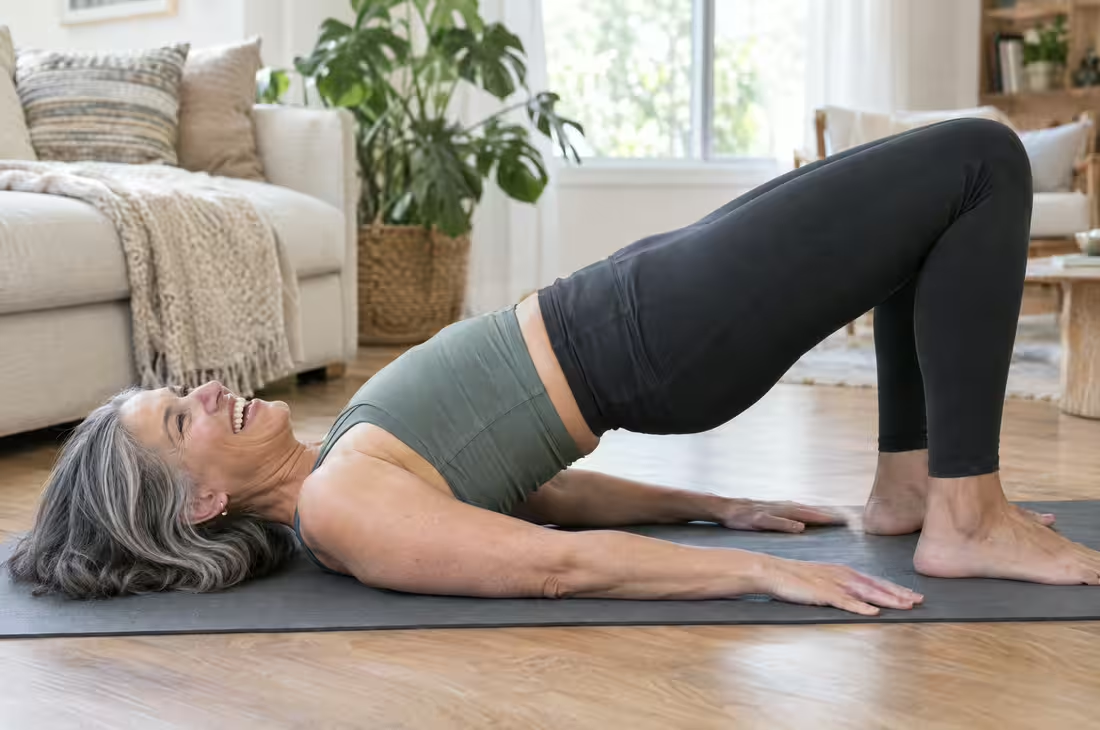
Pain at the front of the knee with stairs, squatting, and sitting is usually patellofemoral pain, the most common knee problem in active adults. Pain below the kneecap in jumpers and runners is patellar tendinopathy. Pain and catching at the joint line can be a meniscus irritation, and aching, stiffness, and swelling in people over fifty is usually osteoarthritis. For all of these, weak hips and quadriceps and a stiff ankle load the knee in ways it does not like.
Exercise is the first-line treatment. For knee osteoarthritis and for degenerative meniscus changes, structured physical therapy has matched arthroscopic surgery in randomized trials.
Common experiences
What people with knee pain often describe
These are the patterns Dr. Shalem hears most often. Any of them is a reason to book a discovery call.
Pain at the front of the knee with stairs or squatting
Pain after sitting with the knee bent
Pain below the kneecap with running or jumping
Catching, clicking, or swelling
Stiffness and aching in a knee with arthritis
Difficulty kneeling or getting up from the floor
Treatment
How physical therapy addresses it.
The program builds hip and quadriceps strength, improves ankle and hip mobility, corrects how the leg is controlled in squatting, stairs, and running, and progresses load in stages. For arthritis, it follows the structured exercise protocols shown to reduce pain and delay surgery. Running and sport are reintroduced with clear criteria.
What a video visit looks like
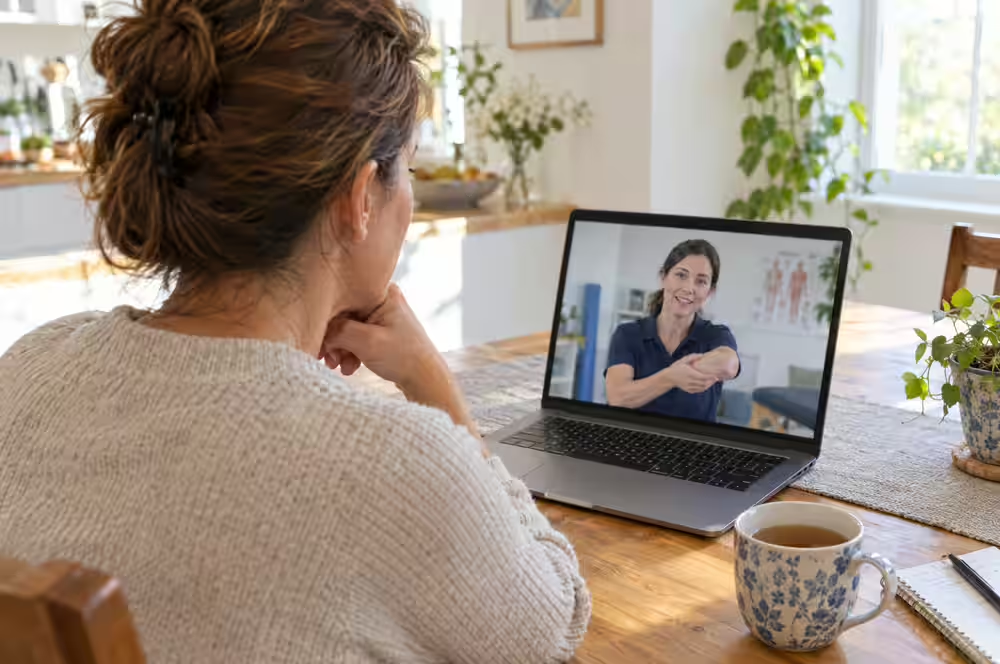
Dr. Shalem watches squats, step-downs, and single-leg control on camera and uses that to find what is driving the knee pain. A step and a resistance band are the usual equipment.
Where you live
Tell us where you are
Insurance, referral rules, and booking depend on where you live. Choose your area and we take you to the right page.
Not listed? Dr. Shalem can only treat patients located in a state where she holds a license. Send a message and we will tell you what is possible.
Questions
Questions people ask about knee pain
How it works
How a virtual visit works
Dr. Shalem watches squats, step-downs, and single-leg control on camera and uses that to find what is driving the knee pain. A step and a resistance band are the usual equipment.
Discovery call
15 minutes, free, by phoneA short call to hear what is going on, explain how visits work, and check insurance or pricing. No pressure to book.
Evaluation
60 minutes, by videoDr. Shalem takes a full history, watches how you move and breathe, and guides the self-assessments she needs to build a plan.
Your plan
Same visitYou leave the evaluation with a plain-language explanation and a short home program, usually a few minutes a day.
Follow-ups
45 minutes, every 1 to 2 weeksProgress checks, program updates, and techniques you can do yourself, for as long as they are useful.
For a video visit you will need
- A phone, tablet, or laptop with a camera
- A private room
- A mat or towel
- About an hour
Questions
Knee pain questions
I have a meniscus tear on MRI. Do I need surgery?
For degenerative tears, trials show physical therapy does as well as arthroscopic surgery for most people. Surgery is considered for locked knees or when a structured program has not helped.
Should I stop running?
Usually not entirely. Running is modified in volume and intensity while the program builds the capacity to tolerate it again.
Can video physical therapy work for knee pain?
Yes. The treatment is progressive strengthening and movement retraining, which is coached on camera. Trials after knee replacement have shown telehealth rehab to be as effective as in-person care.
Where do you see patients?
By video, to patients located in a state where Dr. Shalem is licensed. Choose your area on this page for the insurance and referral rules that apply to you.

Your physical therapist
Dr. Elana Shalem, DPT
Doctor of Physical Therapy, University of St. Augustine for Health Sciences, Miami. Licensed physical therapist.
Dr. Shalem treats pelvic health for women and men, from pregnancy and postpartum recovery to bladder, bowel, and pelvic pain conditions and recovery after prostate or pelvic surgery, and general orthopedic conditions of the back, neck, hips, knees, shoulders, and feet. Visits are one-on-one and unhurried, and she explains what she is seeing in plain language.
More about Dr. ShalemPrefer to write? Send a message.
Questions about insurance, pricing, or whether physical therapy is the right next step? We reply within one business day.
Start with a free 15-minute call.
Tell us what is going on, hear how Dr. Shalem would approach it, and decide from there.